Photic Sneeze Reflex: Why Bright Light Makes You Sneeze
Roughly one in four people sneeze in sunlight. The other three have no idea what you mean.

Between roughly a fifth and a third of people sneeze when they step into bright light. It runs in families and has a formal name — ACHOO syndrome, for autosomal dominant compelling helio-ophthalmic outburst — but that name now overstates what is known. Large genetic studies find a polygenic trait rather than a single dominant gene, and the neural mechanism remains genuinely unexplained.
This is a rare case where the acronym is more confident than the science. It is a good one to know about precisely because the confident version is everywhere.
What the reflex actually is
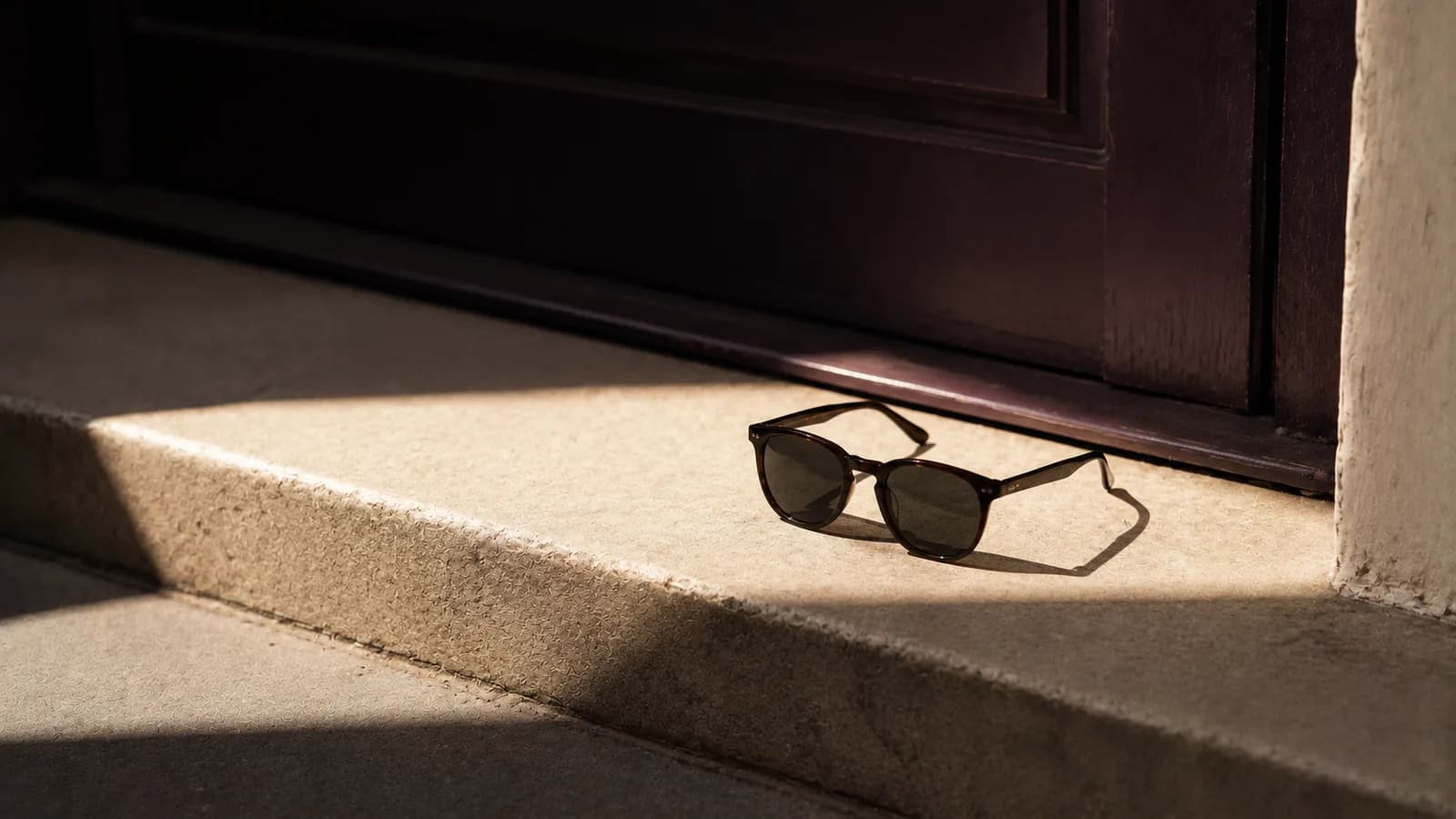
The trigger is a sudden increase in light intensity — walking out of a cinema into afternoon sun, emerging from a tunnel, stepping outside on a bright morning. What matters is the change rather than the colour or wavelength of the light, and the response is typically a short burst of two or three sneezes rather than a single one.
It is immediate, involuntary, and completely uncoupled from anything in the nose. Nothing has been inhaled. There is no irritant. The nasal apparatus is being driven by an event happening entirely in the visual system.
It is also old news. Descriptions consistent with the reflex appear in Aristotle, who wondered why the sun makes people sneeze while the heat of a fire does not — an observation that anticipated the modern finding that intensity change rather than warmth is what matters.
How common is it?
The commonly cited range is 18 to 35 percent of people, with some studies reporting a modest male excess. That range is wide, and the reason is worth understanding rather than glossing over.
Prevalence estimates depend heavily on how the question is asked and who is asked. A genome-wide study in a Chinese cohort of 3,417 people found 25.6 percent reporting the reflex. A web-based survey of over 11,000 Japanese participants found 3.2 percent. That is an eightfold difference between two large studies, which tells you something important: much of the variation reflects ascertainment method rather than real population difference.
So the round "one in four" figure is a reasonable rule of thumb for a Western population and should not be treated as a measured constant.
The name is doing more work than the evidence
ACHOO stands for autosomal dominant compelling helio-ophthalmic outburst — a backronym constructed to spell the sneeze, and a claim about inheritance embedded in a name.
The familial pattern is real. The reflex clearly clusters in families, and reports of a parent-to-child transmission pattern consistent with dominant inheritance go back decades. But genome-wide association studies have not found the single major locus that a simple dominant trait would imply.
A landmark study of over 5,000 participants identified a significant variant, rs10427255, in an intergenic region of chromosome 2 near the ZEB2 gene. The Chinese cohort replicated it and added a second locus on chromosome 3. Each has a modest effect — odds ratios around 1.7 and 0.65 respectively — and even combined they classify the trait only moderately well. Broader analyses have implicated dozens of contributing markers.
The authors of the 2019 study state the conclusion plainly: the reflex is likely a complex rather than Mendelian phenotype. Which means the first two words of its official name describe a model the data have moved past. The trait is heritable and polygenic, not autosomal dominant in the textbook sense.
Why does light reach the nose at all?
The standard explanation is crossed wiring: the optic nerve and the trigeminal nerve run close together, and intense signalling in one spills into the other. The trigeminal nerve carries sensation from the face and mediates the sneeze reflex, so trigeminal activation would produce a sneeze — the same nerve that makes your nose run when you eat chilli, despite nothing actually irritating the nasal lining.
The problem is a physiological one. Light cannot directly excite the trigeminal nerve. Researchers working on this note that the mechanism is necessarily more complex than the simple crossed-wires picture allows, and that no pathway has been established.
The alternatives
Several proposals exist and none is settled. One is parasympathetic generalisation: the pupillary response to bright light involves parasympathetic activation, and the argument is that this activation spreads to nearby pathways producing nasal secretion and the sneeze. Another places the reflex within the trigeminocardiac reflex family, a broader set of trigeminally mediated autonomic responses.
A 2019 review put it directly: the biomedical mechanism remains largely unknown. That is not a gap being quietly filled — the trait may be unique to humans, which means there is no animal model in which to study it, and that alone explains much of why the question has stayed open.
Why a sneeze, of all responses?
A sneeze is a coordinated, explosive expiration that exists to clear the nasal airway of irritants. It is a defensive reflex with a clear job, which makes its recruitment by a light source stranger than the crossed-wiring language usually conveys. Nothing is being cleared.
It is worth allowing that the reflex may have no function at all. A reflex arc with a low activation threshold will occasionally be tripped by inputs it was not built for, and there is no requirement that every reliable physiological response be an adaptation. The photic sneeze may simply be a system that is easier to trigger in some people than others.
It also has relatives. Some people sneeze reliably after eating a large meal — a phenomenon reported under the name snatiation — and others sneeze in response to spicy food or on plucking an eyebrow. The common thread is a defensive nasal reflex responding to inputs that have nothing to do with the nose, which suggests the sneeze reflex is broadly easy to trip rather than that light is uniquely special.
Does it matter practically?
For most people it is an oddity. It attracts more attention than its severity warrants because of specific contexts where a burst of involuntary sneezes carries risk — emerging from a tunnel while driving, or during procedures requiring stillness. Aviation medicine has taken an interest for similar reasons.
The mitigation is unglamorous and obvious: sunglasses, a brimmed hat, or looking away from the light source when transitioning between light levels. Nothing addresses the reflex itself, because nothing is known well enough to address.
What makes it genuinely interesting is the same feature that makes it hard to study — a sensory system triggering an output belonging to a different one, with no established route between them. That misdirection is the recurring theme in this hub, and its clearest cousin is pain in your forehead from something cold touching the roof of your mouth.
Same trick, different system
Nervous Laughter: Why We Laugh at the Worst Possible Moments
Frequently asked questions
You likely have the photic sneeze reflex, reported by roughly a fifth to a third of people. A sudden increase in light intensity triggers a sneeze through a pathway that has not been established — the common crossed-wires explanation is a hypothesis, not a demonstrated mechanism.
It is heritable and clusters strongly in families, but genome-wide studies point to a polygenic trait rather than a single dominant gene. Individual identified variants have modest effects, and even in combination they predict the trait only moderately well.
Autosomal dominant compelling helio-ophthalmic outburst — a backronym built to spell the sneeze. The autosomal dominant part reflects early family studies and is not well supported by later genetic work, which favours a complex polygenic pattern.
Commonly cited estimates range from 18 to 35 percent, but the spread across studies is much larger than that. Two large genetic studies reported 25.6 percent and 3.2 percent respectively, with most of the difference attributable to how participants were surveyed.
There is no treatment, since the mechanism is not understood well enough to target. Practical mitigation involves reducing the abrupt change in light intensity — sunglasses, a brimmed hat, or looking away from the light when moving from dark to bright surroundings.
This article is educational science trivia about everyday human biology and psychology. It is not medical advice, diagnosis, or treatment, and it is not a substitute for care from a qualified professional.