The Sunk Cost Fallacy: Why You Finish the Bad Film
Both tickets were non-refundable. Most people chose the trip they expected to enjoy less.


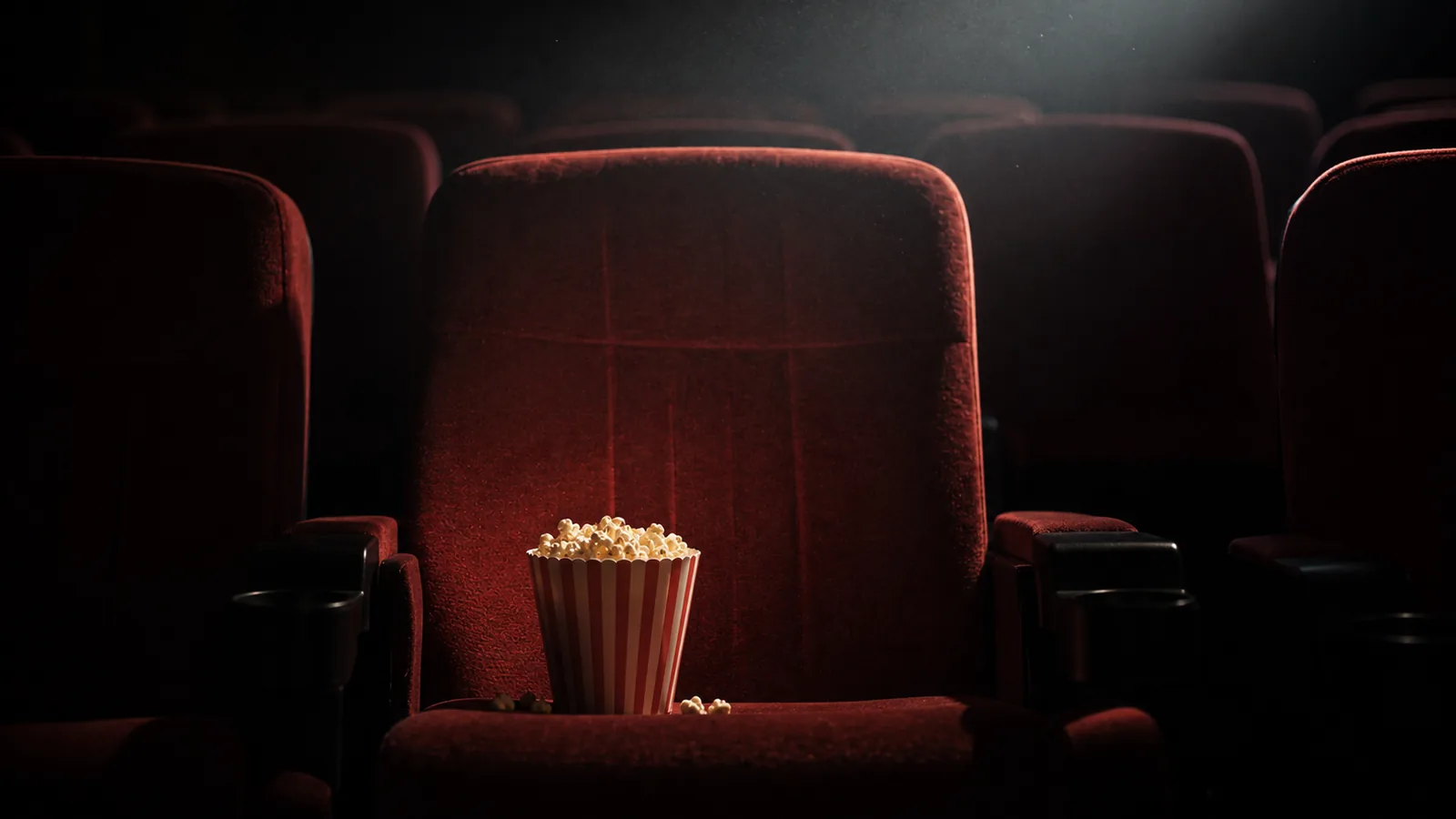
You keep watching a film you are not enjoying because you paid for the ticket. Economically the money is gone whichever way you choose, so it should not enter the decision — but it does, reliably and across domains. The evidence is unusually solid for a behavioural finding, though the popular claim that animals do not do this has not held up.
This is one of the few entries in this hub where the original demonstration has survived intact and the replication picture is genuinely good.
The experiment that named it
Hal Arkes and Catherine Blumer published the definitive treatment in 1985. In their best-known scenario, participants imagined having bought a $100 ticket to a weekend ski trip in Michigan and then a better $50 trip to Wisconsin for the same weekend — with both tickets non-refundable.
More than half chose the Michigan trip, the one they expected to enjoy less, because it had cost more. The money was unrecoverable either way. The only rational input was which weekend would be better, and a majority ignored it.
Arkes and Blumer ran ten separate experiments and found the same behaviour across contexts, including a field study of theatre season-ticket holders in which people who had paid full price attended more performances than those given a discount.
Why the money should not matter
The economic argument is simple and unusually clean. A rational decision compares future costs and benefits. Money already spent is identical across every option, so it cancels out and should have no influence.
The subjective experience is exactly the opposite. Abandoning something you have invested in feels like taking a loss at that moment, even though the loss occurred when you spent the money. Persisting feels like preserving something.
That framing asymmetry is the mechanism. Losses are weighted more heavily than equivalent gains, so the option that looks like avoiding a loss wins — which is the same asymmetric weighting behind one bad comment outweighing ten good ones.
Where it does real damage
Film tickets are the teaching example. The consequential versions are elsewhere.
- Failing projects that continue because of what has already been spent — the effect is sometimes called the Concorde fallacy after a programme both governments knew was uneconomic long before it flew.
- Careers and courses of study pursued past the point of interest because of the years already invested.
- Relationships and commitments maintained on the basis of duration rather than present quality.
- Escalating commitment in organisations, where the person who authorised an investment is often the one deciding whether to continue it.
That last case is worth separating. Escalation of commitment is partly sunk cost and partly self-justification: abandoning the project means publicly conceding the original decision was wrong. The two motives compound, which is why the effect is often strongest in exactly the people best placed to stop it.
The effect also strengthens as the investment grows, which is what makes large commitments the dangerous ones. A small sunk cost is easy to write off; the same reasoning applied to years or millions produces exactly the escalation the mechanism predicts, at the point where the consequences are largest.
The claim that animals are immune
For years the sunk cost fallacy was presented as distinctively human — a pathology of reasoning that other species avoid. This was used to argue it stems from something specific to human self-justification.
That has not survived. Work published in Science in 2018 by Sweis and colleagues found sunk-cost-like behaviour in mice, rats and humans on comparable foraging tasks, with all three species showing greater persistence the more time they had already invested.
Which changes the interpretation. If rodents do it too, an explanation resting on ego and public self-justification cannot be the whole story — some simpler valuation process, in which prior investment inflates the perceived worth of continuing, appears to be doing part of the work.
It also connects the fallacy to its constructive twin. Effort raising the value you place on something is what makes people overvalue furniture they assembled themselves. Same input, opposite usefulness: in one case you enjoy your shelf more, in the other you finish a bad film.
Why the fallacy has a name in economics too
The concept predates the psychology. Economists have long treated sunk costs as irrelevant to forward-looking decisions, and the phrase describes a departure from that norm rather than a discovery about the mind.
What the psychological work added was the demonstration that the departure is systematic rather than occasional, that it appears in careful people making considered decisions, and that it survives being explained to them.
That combination is what makes it a bias rather than an error. An error is something you stop making once corrected; this persists after correction, which is why the useful responses are structural rather than educational.
What actually helps
Unlike most entries in this hub, the intervention here follows directly from the mechanism and is straightforward to apply.
The reframe is to ask what you would choose if you were arriving at this decision fresh, with no history. Would you buy a ticket to this film right now? Would you start this project today knowing what you know? The past spending is genuinely irrelevant to the answer, and asking the question in that form makes the irrelevance visible.
Two things reduce it structurally as well. Separating the person who authorises a commitment from the person who reviews it removes the self-justification component. And deciding stopping criteria in advance — before any money is spent — means the question is answered while the sunk cost is still zero.
None of which makes it disappear. The pull is strong enough that knowing about it provides only partial protection, which is true of most robust biases and is worth saying plainly rather than implying a fix.
Same trick, different system
Why You Gesture With Your Hands on the Phone
Frequently asked questions
Continuing with something because of resources already spent, when those resources cannot be recovered and are identical across every option. Rationally the past spending should not affect the decision; in practice it reliably does.
Participants imagined owning a $100 non-refundable ticket to a Michigan ski trip and a $50 non-refundable ticket to a better Wisconsin trip on the same weekend. More than half chose Michigan — the trip they expected to enjoy less — because it cost more.
Yes, contrary to the older claim that it is uniquely human. A 2018 study found sunk-cost-like persistence in mice, rats and humans on comparable foraging tasks, which argues against explanations resting purely on human self-justification.
Because the Anglo-French Concorde programme continued long after both governments understood it would not be commercially viable, with the money already committed serving as the reason to keep going.
Ask what you would choose arriving at the decision fresh, with no history — would you buy this ticket now? Structurally, setting stopping criteria before spending begins, and separating who authorises a commitment from who reviews it, both help.
This article is educational science trivia about everyday human biology and psychology. It is not medical advice, diagnosis, or treatment, and it is not a substitute for care from a qualified professional.