Frisson: Why Certain Songs Give You Goosebumps
Some people get chills from music. Some never have. The difference shows up in a brain scan.

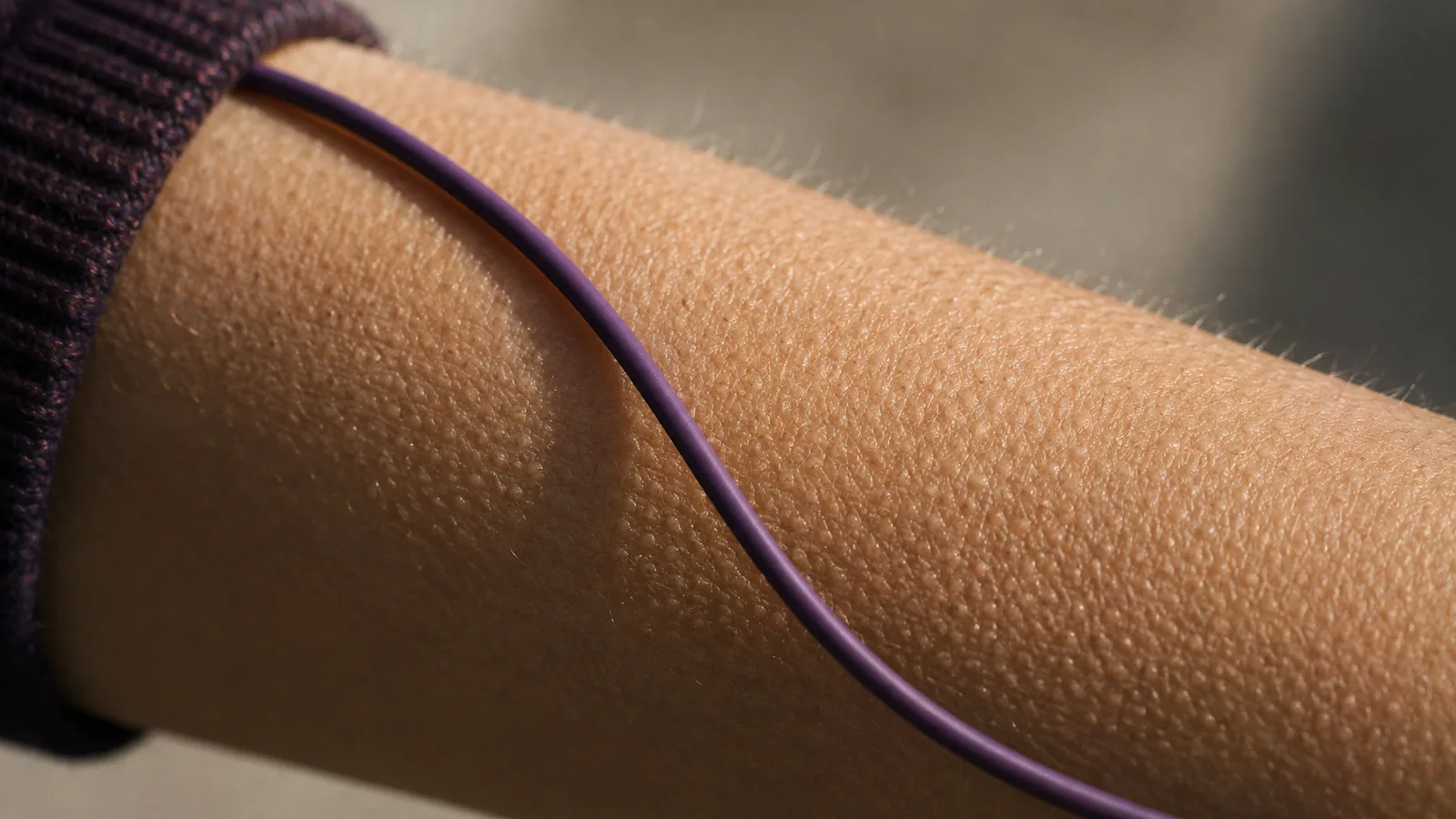
Frisson is the shiver-and-goosebumps response some people get from music, and it is one of the few aesthetic experiences with a measurable neurochemical signature: brain imaging has captured dopamine release during it, in the same reward circuitry recruited by food and drugs. It is triggered largely by violated musical expectation, and a substantial minority of people never experience it at all.
Goosebumps are a thermoregulatory reflex — piloerection, raising hair to trap air. Music is not cold. Something has recruited a temperature-control mechanism for an entirely different purpose, and the recruitment is not incidental.
Not everyone gets it
Estimates of how many people experience musical frisson range from roughly half to over 80 percent depending on the study and how the question is framed. A smaller group — a few percent — report specific musical anhedonia: normal hearing, normal reward responses to other things, and no pleasure from music whatsoever.
The variation is not about musical training or taste. It appears to be a stable individual difference, which puts frisson in the same category as sneezing at sunlight — a trait where one group finds the other's description hard to credit.
What the brain does during a chill
Anne Blood and Robert Zatorre ran the landmark study in 2001, scanning participants listening to music they had chosen because it reliably gave them chills. Chill intensity correlated with activity in regions handling reward and emotion — the ventral striatum, midbrain, and orbitofrontal cortex — alongside decreasing activity in the amygdala and related structures.
That first result showed the reward system was involved. A decade later, Valorie Salimpoor and colleagues showed which neurotransmitter, using a PET tracer that competes with dopamine for binding sites. Listening to intensely pleasurable music produced measurable dopamine release.
The detail that makes the study worth citing is the timing. Dopamine release appeared in dorsal striatal regions during the build-up in anticipation of a peak moment, and in the nucleus accumbens at the peak itself. Anticipation and arrival were neurochemically distinguishable events.
The caveat about dopamine
Popular writing tends to gloss this as "music releases the pleasure chemical." Dopamine is not a pleasure chemical — it is heavily implicated in anticipation, prediction error and motivation, and the anticipatory finding above is a good illustration of why that distinction matters.
It is also worth noting that these are small studies. The PET work involved single-digit or low-double-digit participant numbers, as radioligand imaging generally does. Later work using opioid blockade found that pharmacologically blocking opioid receptors reduced pleasure from music, suggesting the opioid system matters too. The reward account is well supported in outline and thin in detail.
What in the music triggers it
Frisson is not evenly distributed across a piece. It clusters at identifiable moments, and the moments share a structure: the music sets up an expectation and then departs from it.
- A sudden change in dynamics or texture — an orchestra entering, or dropping out.
- An unexpected harmonic move, particularly a chord that does not resolve the way the preceding phrase implied.
- The entry of a voice, or a solo instrument emerging from an ensemble.
- Appoggiaturas and suspensions — a dissonant note held against the harmony before resolving.
- A sudden expansion of frequency range or a shift into an unexpected register.
This fits a broader account of musical emotion in which the pleasure comes from the interaction between what you predicted and what arrived. Familiarity is not a problem for this account: you can know a piece intimately and still get chills, because the expectation being violated is built into the musical structure rather than dependent on genuine surprise.
It is measurable, not just reported
One reason frisson has been studied more successfully than most aesthetic experiences is that it leaves a physical trace. Chills are accompanied by measurable changes in skin conductance and heart rate, and piloerection itself can be filmed and counted. That physical trace is also how frisson is separated from the scalp tingle some people get from whispering and soft sounds, which shows a different autonomic signature entirely.
That matters methodologically. Most questions about musical emotion depend entirely on what people say afterwards. Frisson gives researchers a moment they can timestamp objectively, align with the musical structure, and correlate with imaging — which is why the neurochemical work above was possible at all.
It also constrains the sceptical reading. Whatever frisson is, it is not simply people reporting enthusiasm for music they like; the autonomic nervous system is doing something at specific moments.
Why some people and not others
The most interesting structural finding comes from work by Matthew Sachs and colleagues, who used diffusion imaging to compare people who reliably experience frisson with those who do not. Frisson-experiencers showed greater white-matter connectivity between auditory cortex and regions involved in emotional processing and social-emotional evaluation.
More physical connection between the system that processes sound and the systems that assign emotional significance to it. The interpretation is intuitive and the study is small and correlational, so the direction of causation is open — connectivity could shape the experience, or a lifetime of intense musical engagement could shape connectivity.
The most consistently reported personality correlate is openness to experience, and specifically its intellectual and aesthetic engagement facets — people who report absorption in art, imagination and ideas report frisson more often. As with the connectivity finding, the association is correlational and does not establish that becoming more open to art would produce chills. Frisson belongs to a family of perceptual traits a minority experience and the rest cannot picture, alongside letters that reliably have colours.
Why goosebumps specifically?
This is the part that remains least explained. Piloerection is under sympathetic control and exists for thermoregulation and, in furred animals, threat display. Why an aesthetic reward response should recruit it is not obvious.
The most common suggestion is that frisson borrows machinery evolved for a different purpose — perhaps responses to separation calls or to sudden, biologically significant sounds, which would explain the sensitivity to abrupt dynamic change. That is a plausible story rather than a tested one.
What can be said is that an intensely positive experience producing a physical response associated with cold and fear is not unique here. It is the same shape as crying when nothing is wrong — a body responding to overwhelming aesthetic emotion with the vocabulary of something else entirely.
Same trick, different system
Negativity Bias: Why One Bad Comment Outweighs Ten Good Ones
Frequently asked questions
Musical frisson accompanies activity in the brain's reward circuitry, with imaging studies capturing dopamine release during intensely pleasurable passages. It is typically triggered by moments where the music departs from what its structure led you to expect.
It appears to be a stable individual difference rather than a matter of taste or training. Imaging work has found greater white-matter connectivity between auditory cortex and emotion-related regions in people who experience frisson, though the study was small and correlational.
Consistently: sudden dynamic or textural changes, unexpected harmonic movement, the entry of a voice or solo instrument, suspensions and appoggiaturas, and abrupt expansions of range. The common feature is a departure from what the music set up.
Yes, and this is a point in favour of the expectation account rather than against it. The expectation being violated is built into the musical structure itself, so it continues to operate even when you know exactly what is coming.
It is involved, but calling it the pleasure chemical is misleading. Dopamine is closely tied to anticipation and prediction — in the key study, release occurred both during the build-up to a peak moment and at the peak itself, in different brain regions.
This article is educational science trivia about everyday human biology and psychology. It is not medical advice, diagnosis, or treatment, and it is not a substitute for care from a qualified professional.