Pareidolia: Why You See Faces in Cars, Clouds and Toast
Your brain would rather see a hundred fake faces than miss one real one.

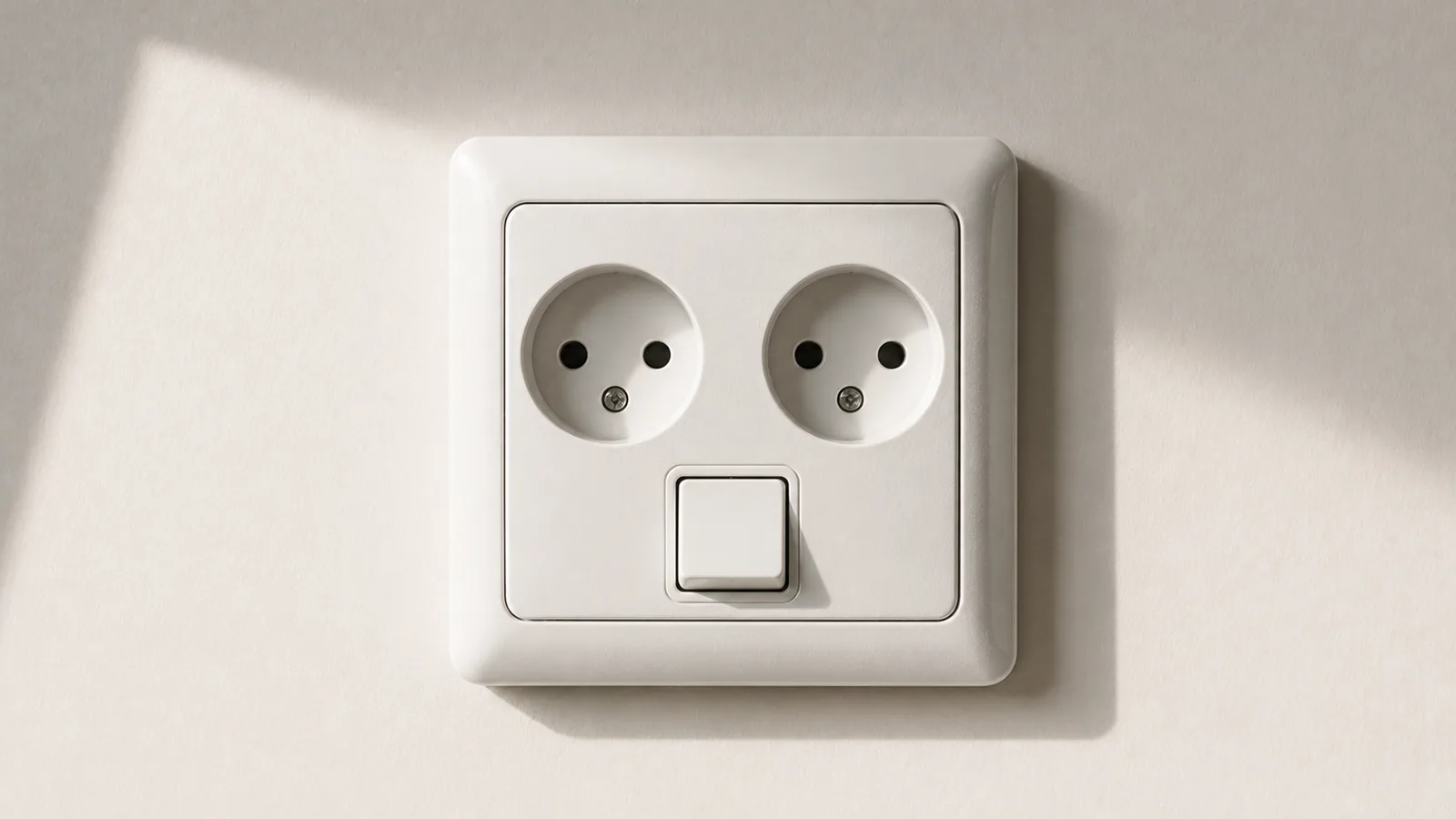
Your brain runs a face detector with the threshold set deliberately low, because the costs of the two possible errors have never been equal. Missing a real face could be fatal; seeing a face in a plug socket costs nothing. Brain imaging shows illusory faces engaging face-processing regions on roughly the same timescale as real ones — around a sixth of a second, before you have decided anything.
The name for this is pareidolia, and it is one of the few perceptual quirks where the evolutionary explanation is unusually well constrained rather than a story told after the fact.
What counts as pareidolia
Pareidolia is the perception of a meaningful pattern — most often a face — in an ambiguous stimulus that contains none. Electrical sockets, car fronts, wood grain, burnt toast, the fronts of buildings, clouds. It is not restricted to faces, but faces dominate, which is itself a clue about which system is responsible.
The experience has a specific quality worth noting. You do not believe the socket is a face. The perception and the judgement come apart: it looks like a face while you know perfectly well it is not, which places pareidolia alongside déjà vu as a case where a percept persists in the face of contradicting knowledge.
The face system
A region on the underside of the temporal lobe, the fusiform face area, responds far more strongly to faces than to other objects — a finding established by Nancy Kanwisher and colleagues in the 1990s and among the more robust results in cognitive neuroscience.
Illusory faces engage it too. Magnetoencephalography work has found that pareidolic images evoke a response in face-selective regions at around 165 milliseconds, comparable in timing to genuine faces and far faster than any deliberate evaluation. Whatever is happening, it is happening in the perceptual system rather than in your interpretation of what the perceptual system delivers.
One caveat about the fusiform face area
The FFA is often described as "the face region," and its specificity is genuinely disputed. An alternative account, associated with Isabel Gauthier, holds that the region supports expert-level discrimination within any highly familiar category — that it responds strongly to faces because we are all face experts, not because faces are its dedicated subject. Studies training people on novel object categories have found FFA responses increasing with expertise.
This does not affect the pareidolia finding, which concerns what the region does rather than why it exists. It is worth knowing because articles describing a hardwired face module are overstating a contested position.
Why the threshold sits so low
Any detection system facing a weak signal in noise must set a threshold, and that choice determines which error it makes. Set it high and you miss real signals; set it low and you generate false alarms. There is no setting that avoids both.
For faces, the two errors have never cost the same. Failing to notice a person watching you from cover could be lethal. Briefly perceiving a face in a rock formation costs a moment. A system tuned by that asymmetry ends up with a threshold low enough to fire on any arrangement roughly matching two-eyes-above-a-mouth — which is a very common arrangement, because it is a simple one.
This is error management reasoning, and its virtue here is that it predicts the direction of the bias before you observe it. A theory that merely accommodated the finding after the fact would be worth much less.
The evidence that it is really the face system
Two lines of work make the case stronger than imaging alone could.
Rhesus macaques show face pareidolia. Presented with illusory-face images, they look preferentially at the illusory eyes and mouth in the same way they inspect real faces — which places the phenomenon well before human culture and rules out learned interpretation as the whole story.
And illusory faces carry social attributes rather than merely resembling faces. Work published in 2022 found that when people assign a gender to a pareidolic face, they overwhelmingly judge it male, with the bias appearing across large numbers of images and observers. That is a striking result: an inanimate object is not merely triggering face detection but recruiting the downstream social processing that faces normally receive.
It also suggests the system is doing more than pattern-matching a template. It is running a partial version of the whole face-reading pipeline on an electrical fitting. That same eagerness to find structure is what makes a word you learned on Monday appear everywhere by Friday — the frequency illusion.
The same logic everywhere
Once you see the trade-off, the pattern recurs across senses. A vibration detector set to avoid missing messages will report buzzes from an empty pocket. An auditory system tuned for speech finds words in noise and in music played backwards. In each case the false alarm is not a malfunction but the visible cost of a threshold set where misses are expensive.
It generalises past perception too. Human pattern-detection is powerful, fast and biased toward finding structure, which is enormously useful and occasionally produces confident nonsense — a confidence indistinguishable from the accurate kind, from the inside.
That is the mechanism behind more than sockets and clouds. Reading a fixed personality trait into an isolated gesture works the same way: the meaning feels obvious, and the feeling is not evidence, which is why body-language dictionaries perform so badly.
Is seeing faces a problem?
No. Pareidolia is a normal feature of typical perception, reported by essentially everyone, and its occurrence says nothing about anyone's mental health. Some research has examined whether the tendency to perceive meaningful patterns in noise varies with personality traits, but this is a question about individual differences in a universal phenomenon rather than about a symptom.
The more interesting reframing is what it reveals about ordinary perception. Seeing is not receiving; it is inference under uncertainty, running fast, with a bias toward answers that mattered. Most of the time the inference is right and invisible. Pareidolia is one of the moments you get to watch it work.
Same trick, different system
Why One Foot Outside the Blanket Helps You Sleep
Frequently asked questions
Your face-detection system operates with a deliberately low threshold, because missing a real face has historically been far more costly than a false alarm. Imaging shows illusory faces engaging face-selective brain regions at around 165 milliseconds — comparable to real faces.
No. Pareidolia is a normal feature of typical perception experienced by essentially everyone. Research on individual differences in pattern perception exists, but the phenomenon itself is universal rather than symptomatic.
Rhesus macaques do. Shown illusory-face images, they preferentially inspect the illusory eyes and mouth much as they inspect real faces, which suggests the phenomenon predates human culture and is not simply learned interpretation.
Research published in 2022 found that when people assign a gender to a pareidolic face, they judge it male in the large majority of cases. This suggests illusory faces recruit downstream social face processing, not just an initial detection response.
The fusiform face area responds much more strongly to faces than other objects, but its specificity is disputed. An alternative account holds that it supports expert discrimination within any highly familiar category, with faces being the category everyone is expert in.
This article is educational science trivia about everyday human biology and psychology. It is not medical advice, diagnosis, or treatment, and it is not a substitute for care from a qualified professional.